Free download
FISLI Manṭiq Unit 1: What Is Logic?
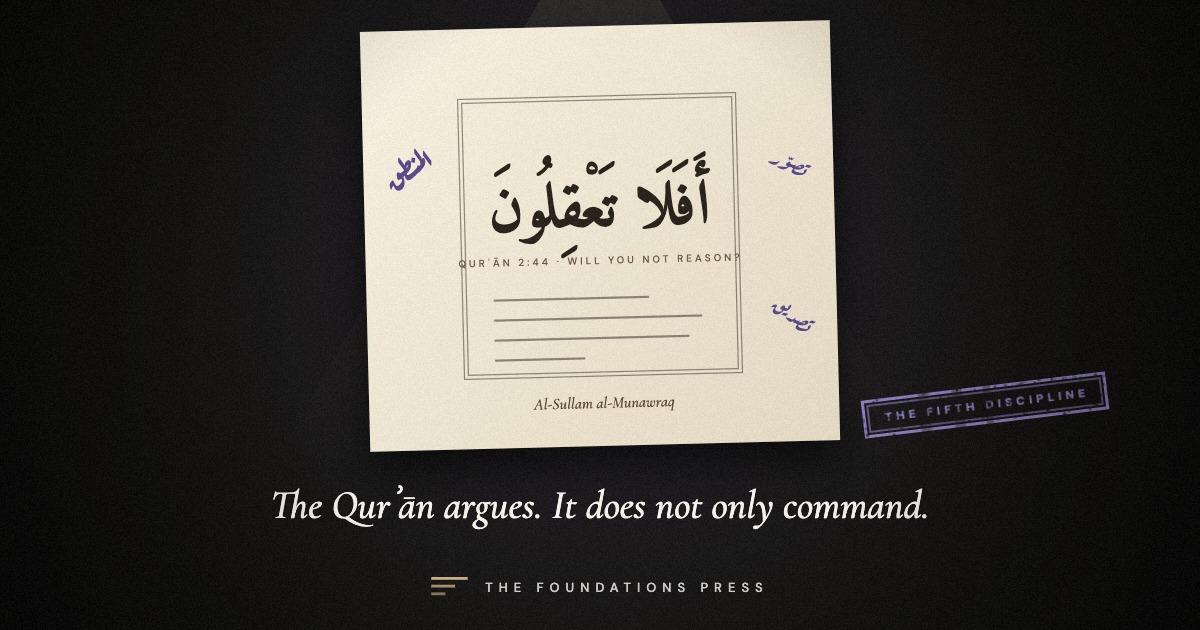
The Qurʾān asks afalā taʿqilūn, “do you not reason?”, thirteen times. This free unit is a complete, classroom ready introduction to Manṭiq, the classical Islamic science of correct reasoning, taken straight from the FISLI Level One sequence. It is the same material a licensed school receives, sources and all.
Teaching at a mosque or weekend program? The download page also gives you a complete Prophetic Sīrah unit, in Teacher and Student editions, and the Year of the Elephant lesson plan for this Sunday.
Read it before you ask for it.
Five pages from the Student Edition, exactly as a class receives them. No form.
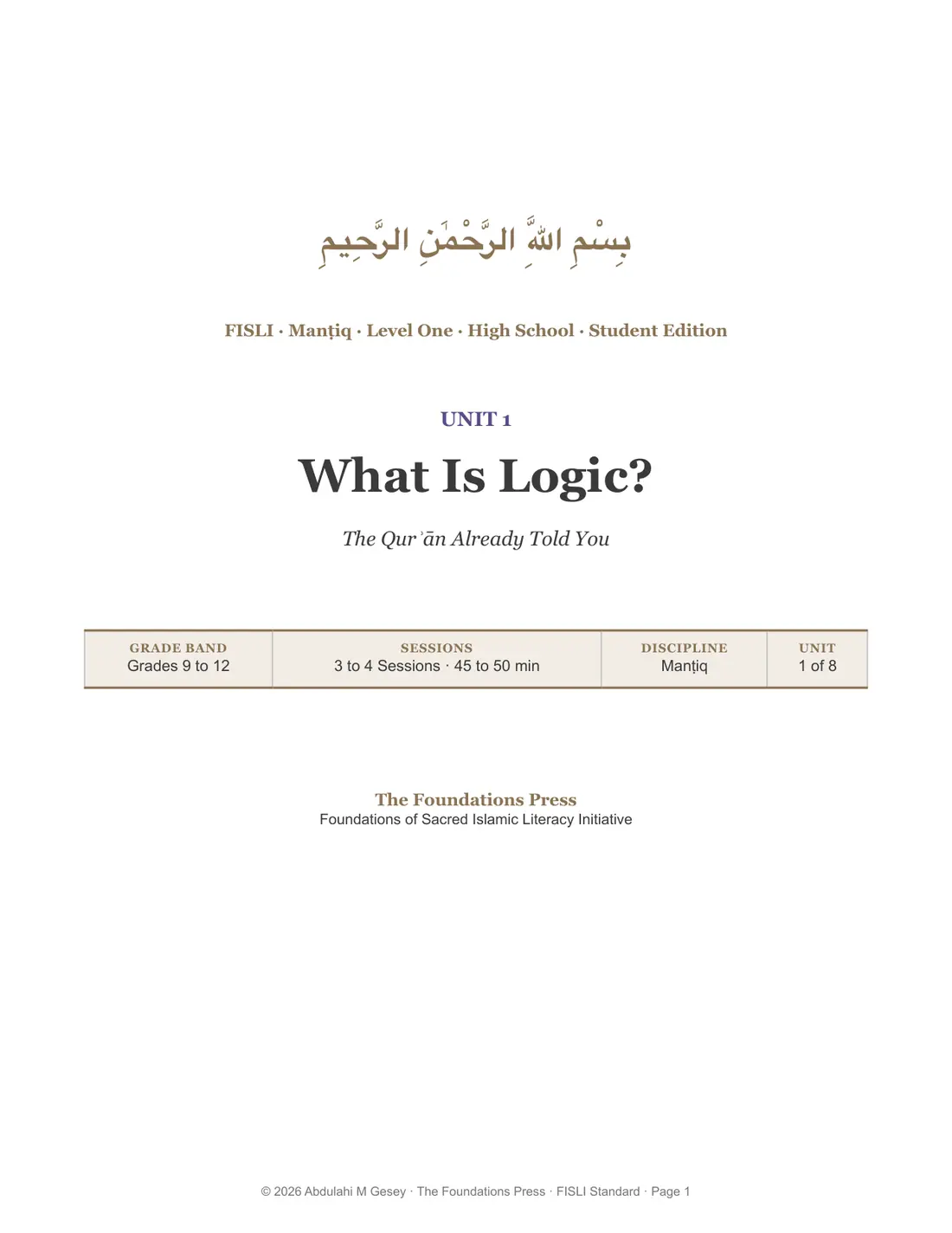
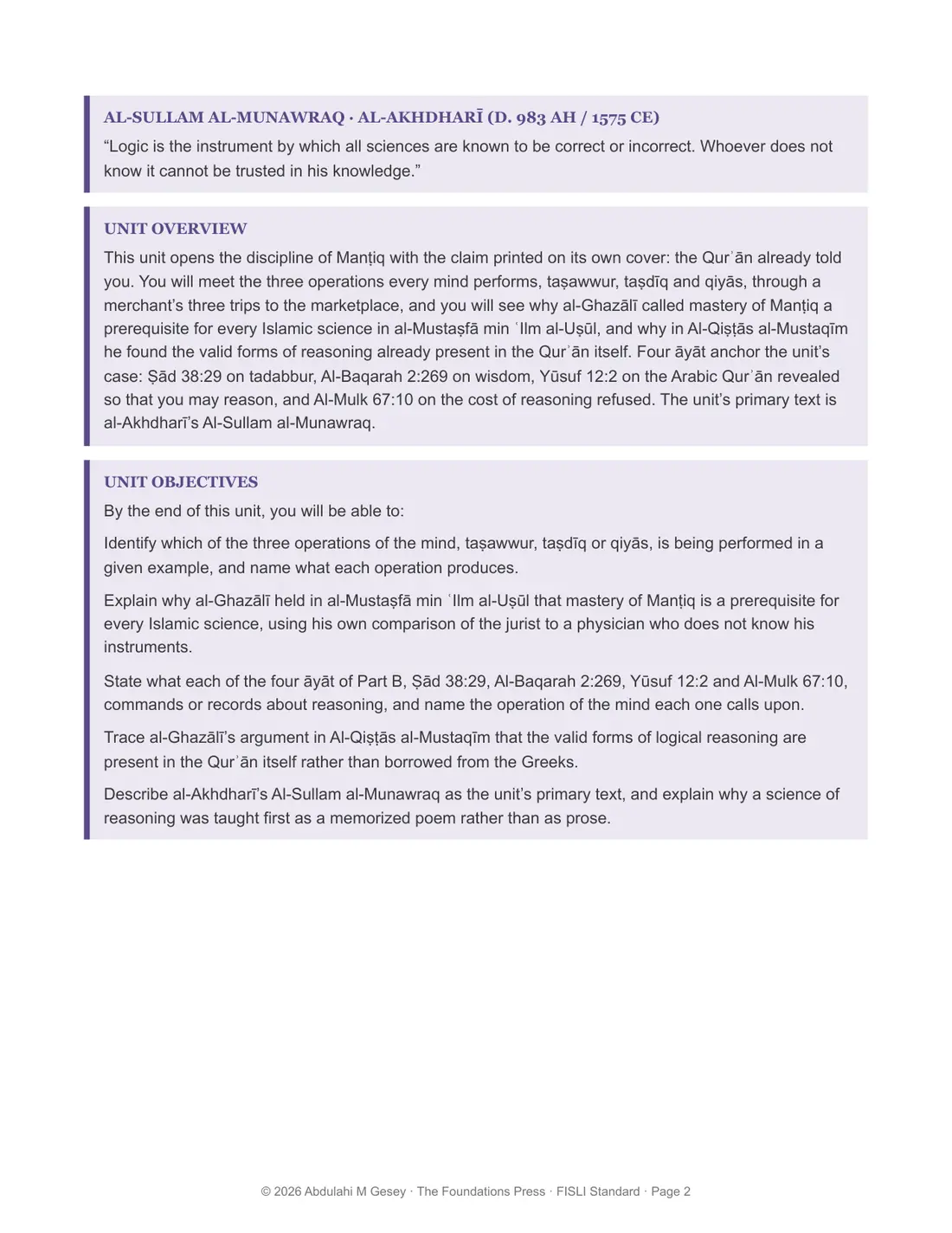
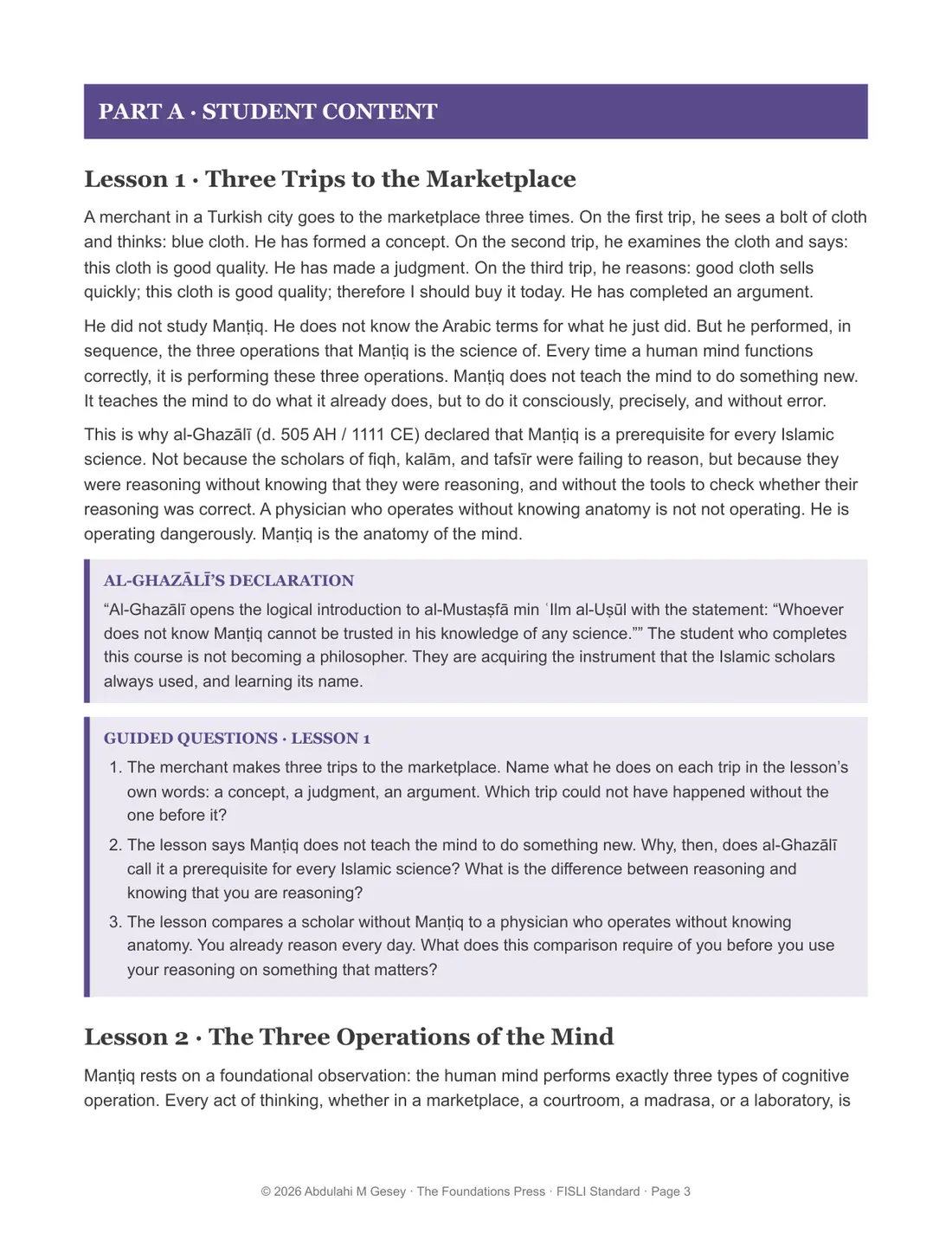
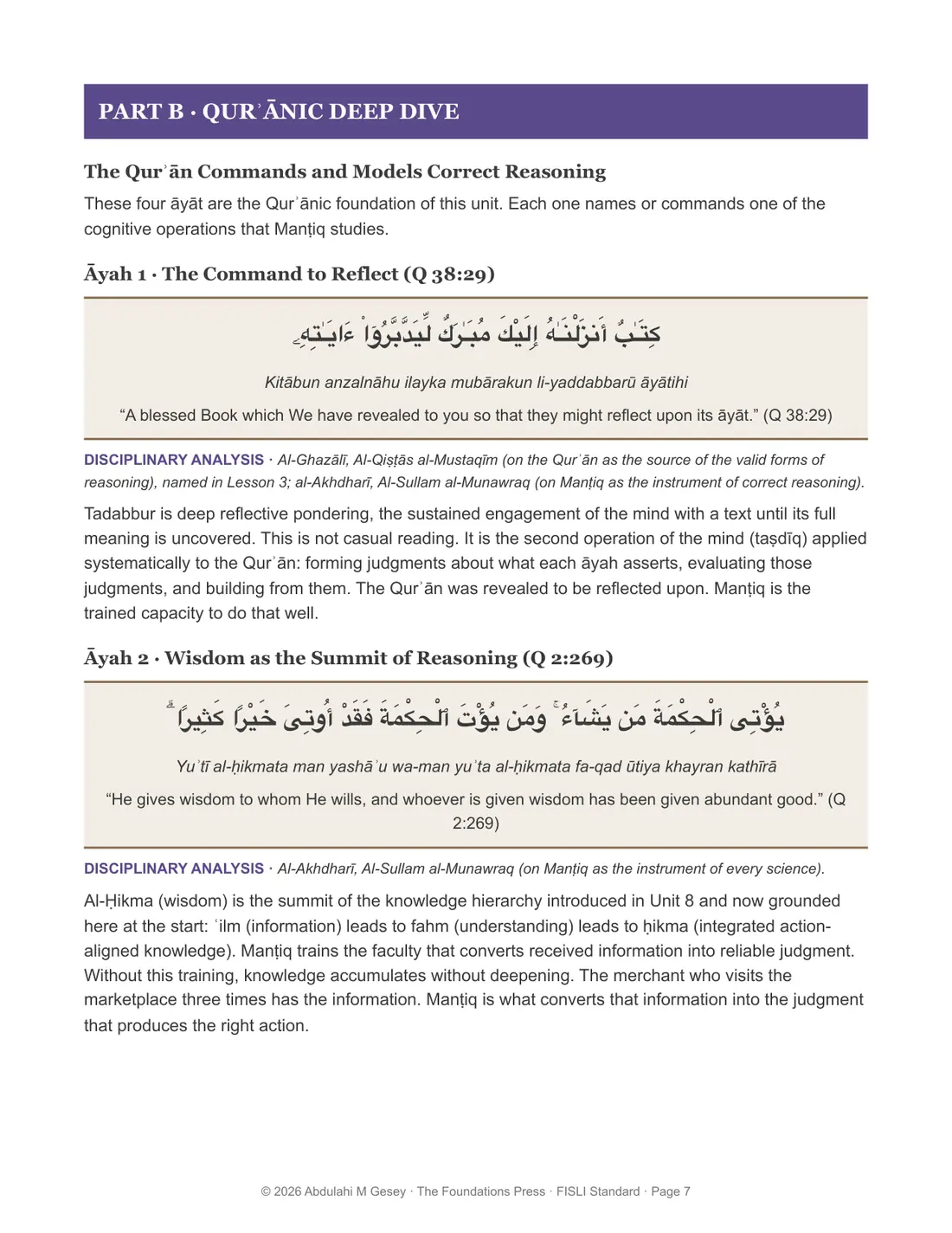
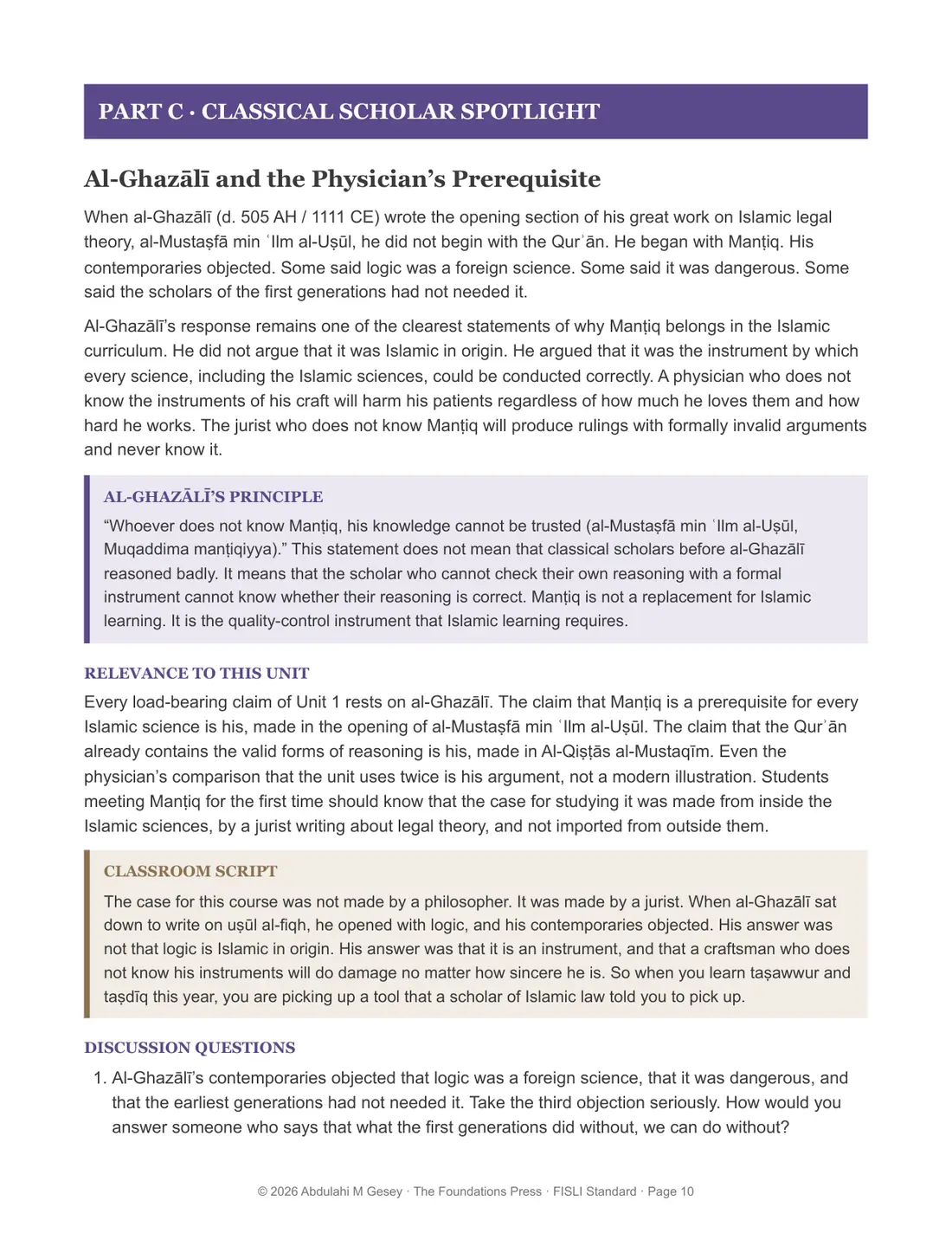
The whole unit is nineteen pages, and the Teacher Edition adds the Teacher Guide and the answer key. Send me the unit
What is inside
- Three student lessons: Three Trips to the Marketplace, The Three Operations of the Mind, and Manṭiq and the Qurʾān, each with guided questions.
- A Qurʾānic deep dive on four āyāt, each printed in Arabic with transliteration and translation.
- A classical scholar spotlight on al-Ghazālī (d. 505 AH / 1111 CE), with a classroom script and discussion questions.
- A Teacher Guide with a pacing guide, conceptual depth notes and a source transparency table.
- A glossary of ten key Arabic terms, with pronunciation and what each word carries.
- An assessment with a full answer key, and a student reflection journal.
- A study of the scholar behind the unit: al-Akhḍarī (d. 983 AH / 1575 CE), author of al-Sullam al-Munawraq, the text the unit follows.
You receive two files: the Teacher Edition, and the Student Edition, which leaves out the Teacher Guide and the answer key so that it can be handed to a class.
Who it is for
Teachers in Islamic schools and mosque weekend programs, and homeschool parents. The unit is written for the High School band, grades 9 to 12. No background in logic is needed to teach it; the Teacher Guide carries the explanation. Students need no Arabic: the āyāt are transliterated and translated.
How to teach it
The Teacher Guide paces the unit over three to four sessions of 45 to 50 minutes: the three lessons in order, then the Qurʾānic deep dive, the scholar spotlight and the assessment.
Then read Teaching Manṭiq at home and in the classroom for sequencing and the mistakes to avoid, and What is manṭiq? for the history and the texts.
Where the work stands
This unit, like all 80 FISLI units, passes the Press’s automated checks of voice, language and structure, and is now in scholarly review. No unit has yet received a scholar’s final signature. Every source is named on the page where it is used. The texts behind the discipline are listed on the Scholarly Sources page.
Questions
Is it really free?
Yes. There is no trial, no card and no checkout. The form takes you straight to the PDF.
Can I print it for my class?
Yes, for your own classroom, program or home. It may not be resold or bundled into a paid product.
What comes after Unit 1?
The full Manṭiq curriculum (12 weeks) and the Manṭiq for Educators primer, which carries the teacher through the Sullam.
Can my school license the whole sequence?
Yes. See licensing or contact us with your grade levels and student count.