Free lesson plan · Prophetic Sīrah · grades 6 to 9 · one session of 45 to 50 minutes · CC BY 4.0
Lesson plan: The Year of the Elephant and Sūrat al-Fīl
A complete session for a classroom, a weekend school or a home: the story behind Sūrat al-Fīl told from the Qurʾān and the earliest historians, with the skill the whole FISLI Sīrah course rests on, reading the label on a source before believing the claim. Built on the three free Year of the Elephant films; the worksheet and answer key are below and as a PDF.
Download the lesson plan and worksheet (PDF)
Objectives
By the end of the session a student can:
- retell the Year of the Elephant in order, from Abraha's church in Ṣanʿāʾ to the birds, naming who reports each part;
- explain what Sūrat al-Fīl (105) says and why Sūrat Quraysh (106) is read beside it;
- label a statement by the kind of source it rests on: the Qurʾān, a ṣaḥīḥ ḥadīth, the Sīra of Ibn Isḥāq, or a later historian;
- say, in one written sentence with its label, what the elephant's refusal meant to the people of Mecca.
Materials
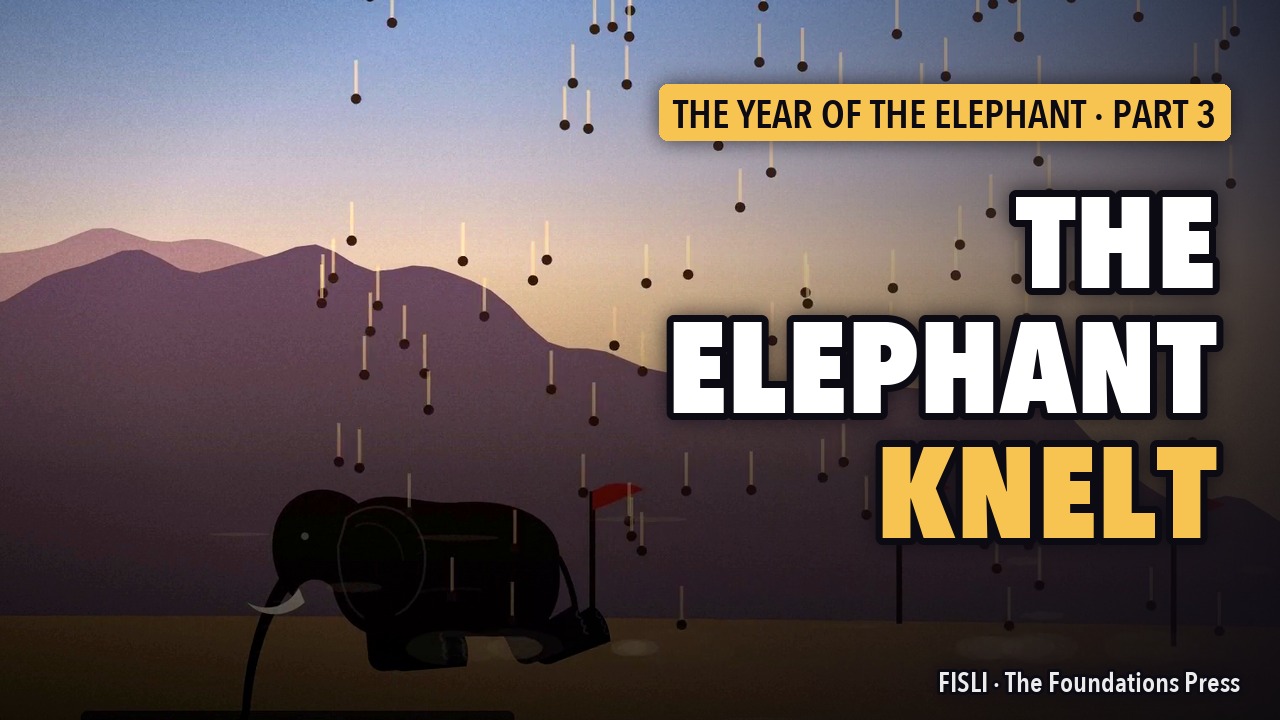
- Part 3 of the films (23 minutes), or Parts 1 to 3 across two sessions. The films are illustrated; no person is depicted.
- The worksheet below, one per student, and the answer key for the teacher.
- Qurʾān 105 and 106, Arabic and translation (Saheeh International).
The session, minute by minute
| Minutes | What happens | Teacher language |
|---|---|---|
| 0 to 5 | Hook. Play the recitation of Sūrat al-Fīl from the opening of Part 3 (or recite it). Ask: what do you already know about the elephant? Write every answer on the board without correcting any. | "By the end we will know which of these the Qurʾān says, which a ḥadīth says, which a historian says, and which nobody says." |
| 5 to 28 | Watch Part 3. Students have the worksheet face down. Pause once, at the chapter "The year he was born" (15:13), and ask who is being quoted on screen at that moment. | "Every time a name appears at the bottom of the screen, that is the film telling you where the sentence came from." |
| 28 to 38 | Label the source. Students turn the worksheet over and mark each of the eight statements Q, H, S or L. Pairs compare; the teacher reads the key. | "A true statement from a later historian is still a later historian's statement. The label is not an insult. It is the address." |
| 38 to 45 | Discussion. Ibn Isḥāq reports that the elephant knelt facing Mecca and ran facing Yemen. What did that mean to the people watching from the hills? What does Sūrat Quraysh say the people of Mecca owed in return? | "Read 106:3 to 4 aloud. Who is the Lord of this House? What did He feed them and keep them safe from?" |
| 45 to 50 | Exit ticket. One sentence: what the elephant's refusal meant, with a label in brackets after it. | "If you cannot put a label on it, you do not know it yet. That is fine. Write what you can label." |
The worksheet: label the source
Mark each statement with the letter of the kind of source it rests on.
| Letter | Kind of source |
|---|---|
| Q | The Qurʾān |
| H | A ṣaḥīḥ ḥadīth, cited by collection and number |
| S | The Sīra of Ibn Isḥāq (d. 150 AH / 767 CE) in the recension of Ibn Hishām (d. 218 AH / 833 CE), a historian's report with its chain |
| L | A later historian, reporting without a chain |
- "Have you not seen how your Lord dealt with the companions of the elephant?" [ ]
- Hagar ran between Ṣafā and Marwa, seven times, looking for water for her baby. [ ]
- Abraha built a great church in Ṣanʿāʾ and wanted the Arabs to make pilgrimage to it instead of to Mecca. [ ]
- ʿAbd al-Muṭṭalib asked Abraha only for his two hundred camels, and said the House had a Lord who would defend it. [ ]
- When the elephant was turned toward Mecca it knelt; turned toward Yemen, it rose and ran. [ ]
- "For the security of Quraysh, their security in the winter and summer journeys." [ ]
- The Prophet ﷺ was born in the Year of the Elephant. [ ]
- The angel Gabriel came to Hagar at the spot where Zamzam broke from the ground. [ ]
Answer key (teacher)
| # | Label | Source |
|---|---|---|
| 1 | Q | Qurʾān 105:1 |
| 2 | H | al-Bukhārī, no. 3364, from Ibn ʿAbbās |
| 3 | S | Ibn Isḥāq, in Ibn Hishām, al-Sīra, vol. 1 |
| 4 | S | Ibn Isḥāq, in Ibn Hishām, al-Sīra, vol. 1 |
| 5 | S | Ibn Isḥāq, in Ibn Hishām, al-Sīra, vol. 1 |
| 6 | Q | Qurʾān 106:1 to 2 |
| 7 | L | Ibn Saʿd, al-Ṭabaqāt, vol. 1, and later historians |
| 8 | H | al-Bukhārī, no. 3364 |
Note on 7: that the Prophet ﷺ was born in the Year of the Elephant is reported by the historians (Ibn Isḥāq and Ibn Saʿd) and is the accepted date; it is not a Qurʾānic statement and no ṣaḥīḥ ḥadīth gives the year, which is why the honest label is L even though the fact is not in doubt. That is the point of the exercise.
Differentiation
- Younger or newer students: use four statements (1, 2, 5, 6) and two labels (Qurʾān, not the Qurʾān).
- Stronger students: add a fifth label, P for poetry, and ask them to find the one line of verse quoted in Part 3 and label it.
- Two sessions: Parts 1 and 2 in the first session (Hagar, Zamzam, the building of the House, the keepers, the hundred camels), Part 3 and the worksheet in the second.
Sources
Qurʾān 105 and 106 (Tanzil text; Saheeh International); al-Bukhārī, Ṣaḥīḥ, nos. 3364 and 3365 (Hagar and Zamzam), 3520 and 3521; Ibn Isḥāq (d. 150 AH / 767 CE), al-Sīra, in the recension of Ibn Hishām (d. 218 AH / 833 CE), vol. 1; Ibn Saʿd (d. 230 AH / 845 CE), al-Ṭabaqāt, vol. 1. The order of telling follows Martin Lings, Muhammad: His Life Based on the Earliest Sources (1983). The full source list of the films is on the films page.
This lesson plan and worksheet are licensed CC BY 4.0: copy, print and adapt them with attribution to The Foundations Press, thefoundationspress.com/lesson-plans/year-of-the-elephant/. The films are the media edition of FISLI Middle School Sīrah, Unit 1, Lesson 3.
Want the whole unit? The free FISLI Manṭiq unit is classroom-ready: three lessons, four Qurʾānic anchors, a scholar spotlight, and an answer key.
Get the free unit